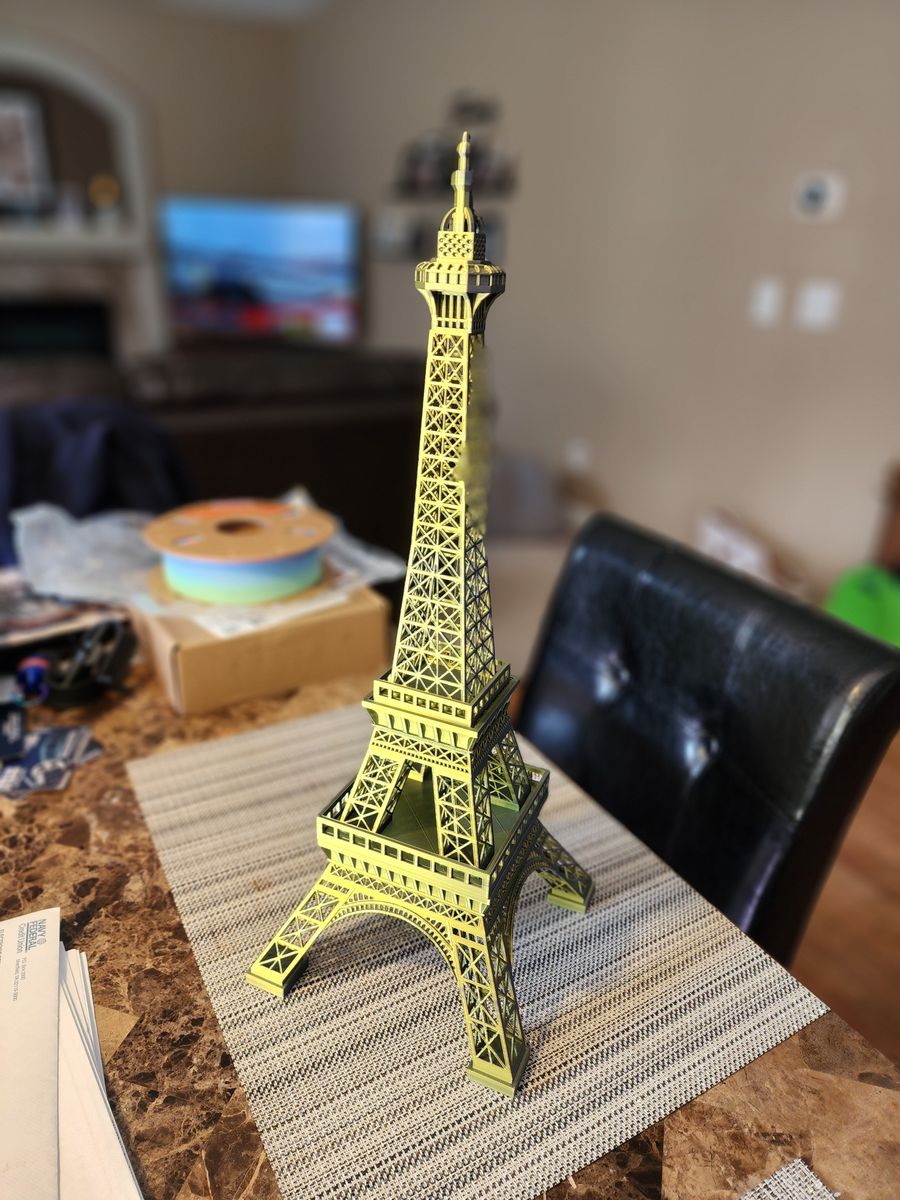
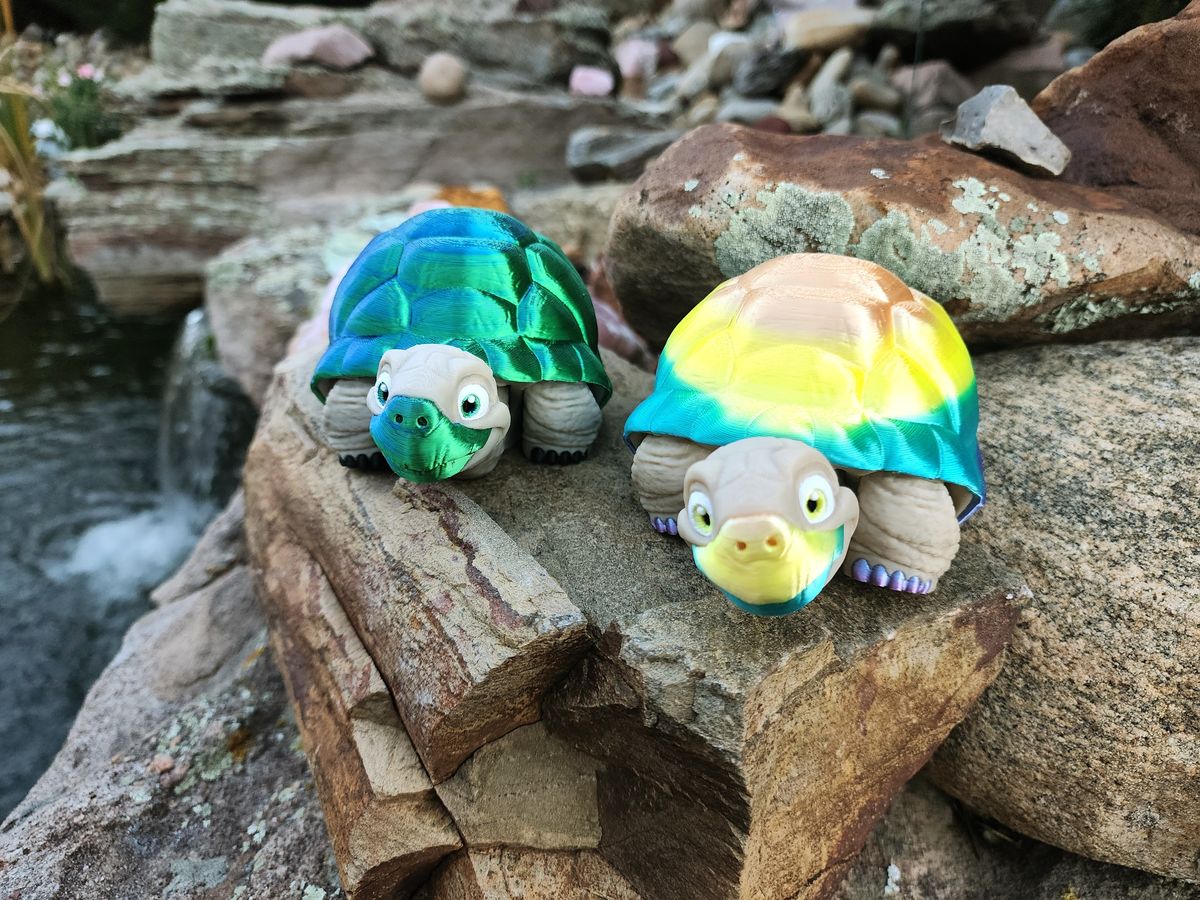
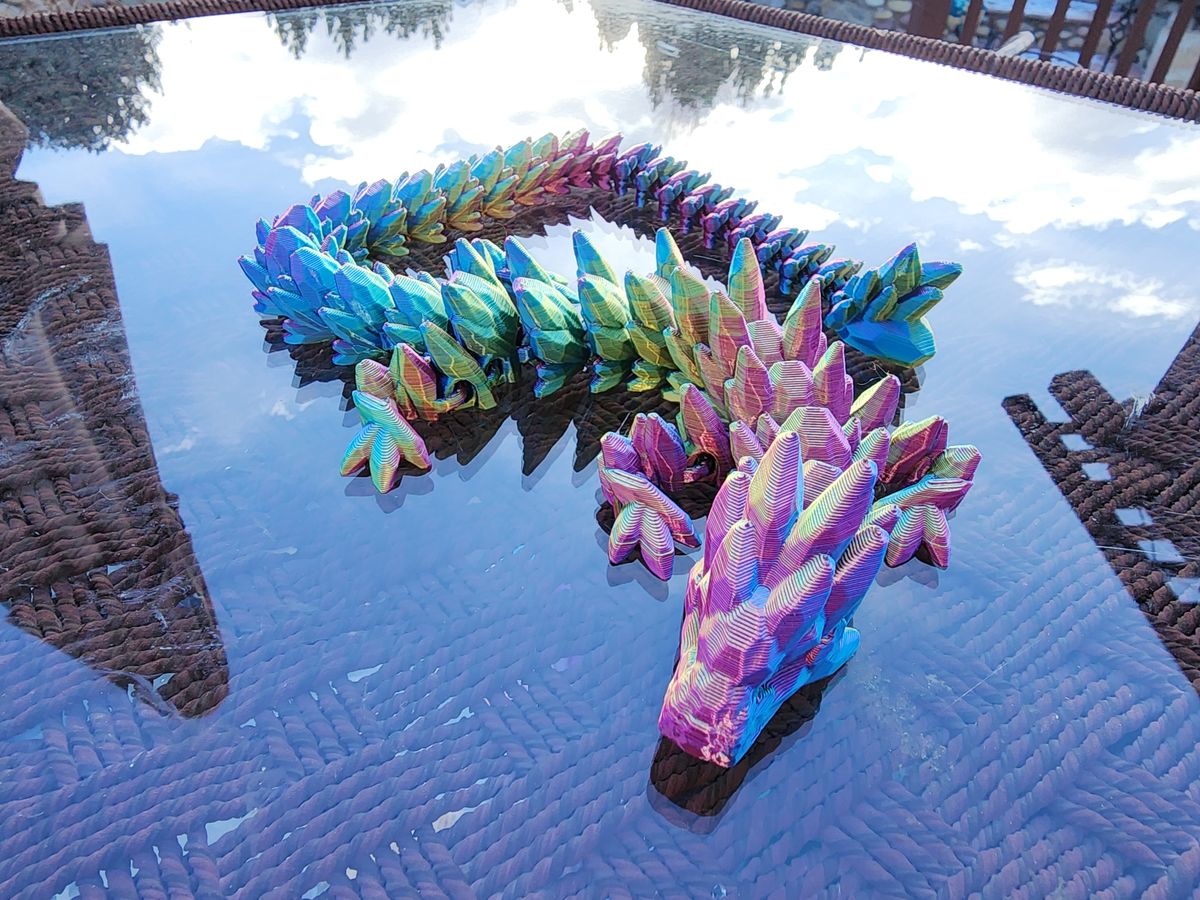
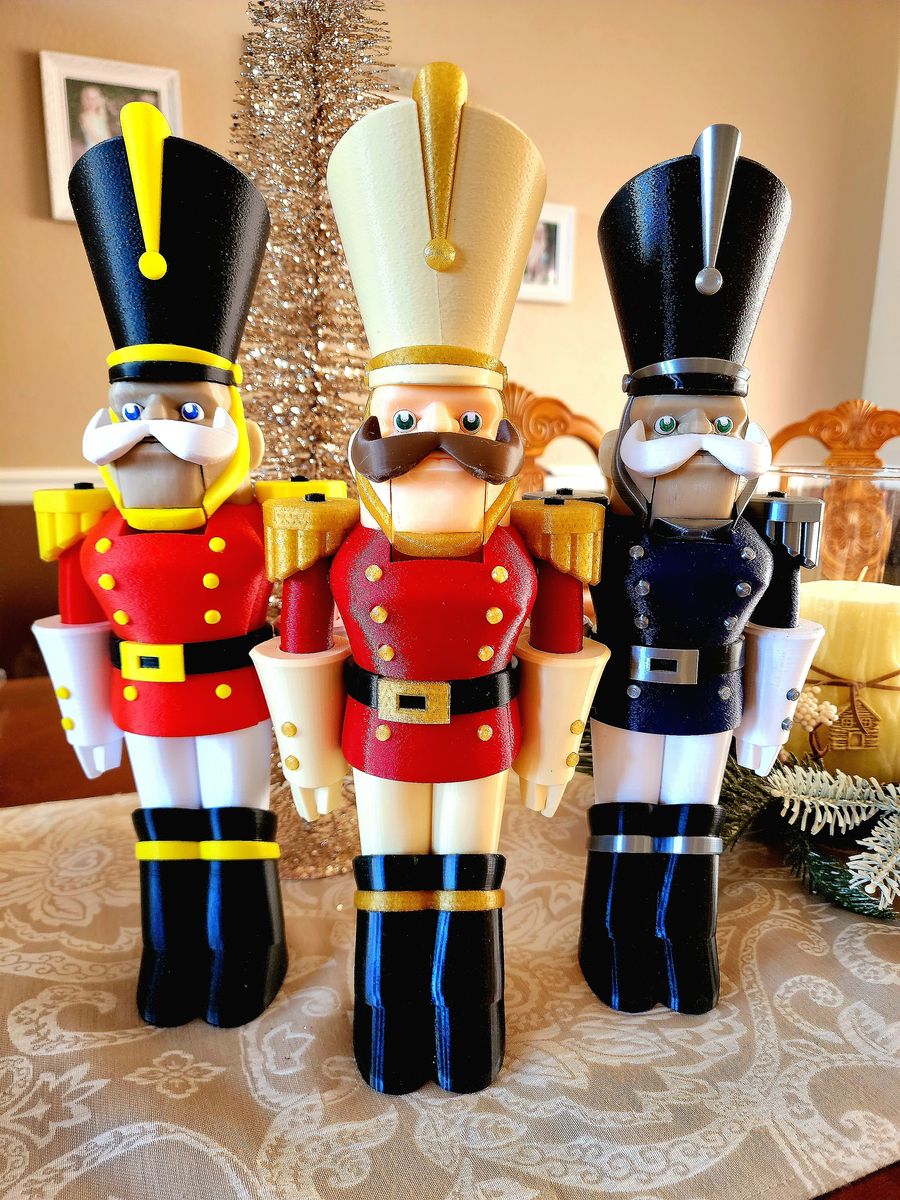
The most popular filament by far. It's made from plant starch, prints easily on any printer, smells mild and comes in hundreds of colors and finishes.
Best for: Display models, toys, cosplay, prototypes, gifts, decorations and most of the prints in our gallery.
Nozzle190–230 °C
Bed45–65 °C
EnclosureNo (leave the door open)
Dry at45–55 °C
Hardened nozzleNo
Pros
- Easiest to print, with almost no warping
- Huge choice of colors and finishes
- Crisp detail and sharp overhangs
- Low odor
Cons
- Softens around 55–60 °C, so don't leave it in a hot car
- Brittle compared with PETG
- Not for outdoor or load-bearing parts
Veria 3D tip: Start here. If a print fails in PLA, it's almost always a setting or first-layer problem, not the material.
PLA+ / Tough PLA
Modified PLA
PLA with additives that make it tougher and less brittle while keeping it easy to print. Each brand's recipe is a little different.
Best for: Functional household parts, brackets, tool holders and anything that might get dropped.
Nozzle200–230 °C
Bed50–65 °C
EnclosureNo
Dry at45–55 °C
Hardened nozzleNo
Pros
- Tougher and more impact resistant than plain PLA
- Prints almost as easily as PLA
Cons
- Still not heat resistant
- Results vary by brand
Veria 3D tip: A great default for practical prints when you don't want to deal with PETG's stringing.
PETG
Polyethylene Terephthalate Glycol
The plastic family used in water bottles, modified for printing. Tougher, more flexible and more heat- and chemical-resistant than PLA, and still easy to print.
Best for: Functional parts, outdoor items, enclosures, mechanical parts and things that need to flex a little without breaking.
Nozzle230–260 °C
Bed70–85 °C
EnclosureNo
Dry at60–65 °C
Hardened nozzleNo
Pros
- Strong, slightly flexible and impact resistant
- Handles more heat than PLA (around 70–80 °C)
- Good chemical and moisture resistance
- Excellent layer adhesion
Cons
- Prone to stringing
- Bonds too well to smooth PEI: use glue stick as a release layer
- Glossy surface shows layer lines
Veria 3D tip: Dry it before printing and slow the cooling fan a bit for stronger parts.
TPU
Thermoplastic Polyurethane (flexible)
Rubber-like flexible filament. Hardness is measured on the Shore scale: 95A is a firm rubber that most printers handle; 85A and below is softer and trickier.
Best for: Phone cases, gaskets, bumpers, tires, watch bands, grips and vibration dampers.
Nozzle210–240 °C
Bed30–60 °C
EnclosureNo
Dry at55–65 °C
Hardened nozzleNo
Pros
- Flexible and nearly unbreakable
- Excellent wear and abrasion resistance
- Great layer adhesion
Cons
- Must print slowly
- Needs a direct drive extruder; doesn't work in most AMS units
- Very hygroscopic and strings when wet
Veria 3D tip: Feed it directly from the spool, not through a multi-color unit, and print around 2–4 mm³/s.
ABS
Acrylonitrile Butadiene Styrene
The tough plastic used in LEGO bricks and car interiors. Strong and heat resistant, and it can be smoothed with acetone vapor for a glossy finish.
Best for: Car parts, electronics enclosures, tool parts and anything that gets hot.
Nozzle240–270 °C
Bed90–110 °C
EnclosureYes, required
Dry at70–80 °C
Hardened nozzleNo
Pros
- Heat resistant to about 95–100 °C
- Tough and impact resistant
- Sands, glues and paints well; acetone smoothing
Cons
- Warps badly without an enclosure
- Gives off fumes and particles: use a filtered enclosure or ventilation
- Not UV stable outdoors
Veria 3D tip: Turn the part cooling fan way down and let the enclosure warm up before starting.
ASA
Acrylonitrile Styrene Acrylate
ABS's outdoor-ready cousin. Similar strength and heat resistance, but it resists UV light and weather without fading or getting brittle.
Best for: Outdoor parts: garden fixtures, mounts, signs, car exterior parts and anything that lives in the Colorado sun.
Nozzle240–270 °C
Bed90–110 °C
EnclosureYes, required
Dry at70–80 °C
Hardened nozzleNo
Pros
- Excellent UV and weather resistance
- Heat resistant like ABS
- Matte finish that hides layer lines
Cons
- Needs an enclosure
- Fumes: ventilate or filter
- Can warp on large parts
Veria 3D tip: Our go-to for anything outdoors. Colorado's high-altitude sun destroys PLA fast.
Polycarbonate (PC)
Polycarbonate
One of the strongest, most heat-resistant common filaments, the material used in safety glasses and bulletproof windows.
Best for: High-strength functional parts, heat-exposed parts, clear covers and engineering prototypes.
Nozzle260–300 °C
Bed100–120 °C
EnclosureYes, heated chamber ideal
Dry at80–90 °C
Hardened nozzleNo
Pros
- Extremely strong and impact resistant
- Heat resistant to about 110–130 °C
- Available in clear
Cons
- Needs high temperatures and a heated chamber
- Warps easily
- Very hygroscopic
Veria 3D tip: Best on printers with an actively heated chamber like the X2D or H-series.
Nylon (PA)
Polyamide: PA6, PA12 and others
A tough, slippery engineering plastic used for gears, bushings and hinges. Often blended with carbon fiber (PA-CF) for stiffness.
Best for: Gears, living hinges, wear parts, tool parts and strong mechanical components.
Nozzle250–290 °C
Bed70–100 °C
EnclosureYes
Dry at80–90 °C, 8+ hours
Hardened nozzleOnly for CF/GF blends
Pros
- Very tough, with excellent wear resistance
- Low friction for moving parts
- Good heat and chemical resistance
Cons
- Extremely hygroscopic: must be dried and printed from a dry box
- Warps without an enclosure
- Pure nylon can be tricky to stick to the bed
Veria 3D tip: Dry it right before printing, every time. Wet nylon prints weak and fuzzy.
Carbon & Glass Fiber Blends
PLA-CF, PETG-CF, PA-CF, PA-GF and more
Regular filaments mixed with chopped carbon or glass fibers. Much stiffer, more dimensionally accurate, and with a beautiful matte finish that hides layer lines.
Best for: Drone frames, brackets, jigs and fixtures, RC parts and anything that needs to be stiff and light.
NozzleBase material +10 °C
BedSame as base material
EnclosureDepends on base
Dry atSame as base
Hardened nozzleYes, required
Pros
- Stiff and dimensionally stable
- Low warping
- Premium matte look
Cons
- Abrasive: destroys brass nozzles quickly
- More brittle in some directions
- Costs more
Veria 3D tip: Use a hardened steel or tungsten carbide nozzle, 0.4 mm or larger (0.6 mm is even better).
PVA & BVOH (dissolvable supports)
Polyvinyl Alcohol / Butenediol Vinyl Alcohol
Support materials that dissolve in plain water. With a multi-material printer, you print the supports in PVA or BVOH and soak them away afterward.
Best for: Complex shapes, internal channels and perfect surfaces under overhangs that would be scarred by normal supports.
Nozzle190–220 °C
Bed45–60 °C
EnclosureNo
Dry at50–60 °C
Hardened nozzleNo
Pros
- Supports dissolve completely in water
- Perfect surfaces under supported areas
Cons
- Expensive
- Extremely hygroscopic: keep it sealed
- Needs a multi-material printer
Veria 3D tip: Use it only for the support interface layers to save money.
HIPS
High Impact Polystyrene
A light, easy-to-sand plastic often used as a support material for ABS because it dissolves in limonene, a citrus-based solvent.
Best for: Dissolvable supports for ABS, and lightweight models.
Nozzle230–250 °C
Bed90–110 °C
EnclosureYes
Dry at60–70 °C
Hardened nozzleNo
Pros
- Dissolves in limonene
- Lightweight and sands easily
Cons
- Needs an enclosure
- Limited uses on its own
Veria 3D tip: Pair it with ABS on a dual-nozzle or multi-material printer.
Polypropylene (PP)
Polypropylene
The plastic in food storage containers and living hinges. Light, chemical resistant and flexible, but it doesn't stick to normal build plates.
Best for: Living hinges, chemical-resistant containers and lightweight parts.
Nozzle220–250 °C
Bed80–100 °C
EnclosureHelpful
Dry at55–65 °C
Hardened nozzleNo
Pros
- Excellent chemical resistance
- Great for living hinges
- Very light
Cons
- Won't stick to PEI: needs a PP sheet or packing tape
- Warps a lot
Veria 3D tip: Print on a strip of polypropylene packing tape on the bed. Only PP sticks to PP.